

An Invisible Threat in Your Supply Chain. What Does the Case of Q4Life Gloves Teach Us?
You've probably thought to yourself before: "My supplier has certificates, the goods look fine, what could go wrong?". The case of the Q4Life brand fitness gloves recall from the Action chain is a wake-up call for anyone involved in import.
PUBLICATIONS
1/13/20262 min read

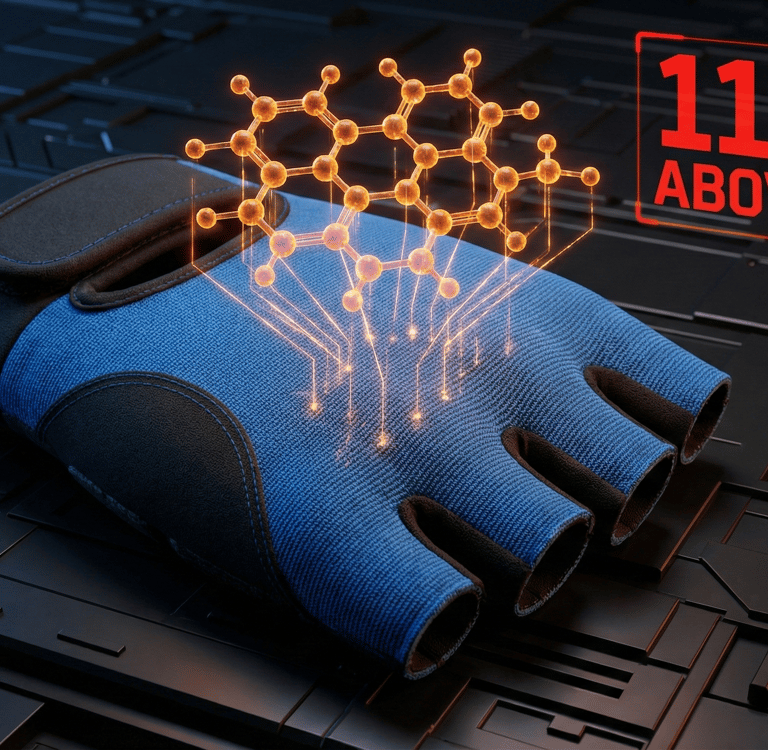
You’ve likely thought to yourself: "My supplier has the certificates, the product looks good, what could possibly go wrong?" The recall of Q4Life brand fitness gloves from the Action retail chain is a wake-up call for every importer. This isn't just a logistical hiccup; it’s a moment of truth showing that the chasm between a factory's declaration and laboratory reality can swallow your business.
The facts are brutal.
Polycyclic Aromatic Hydrocarbons (PAHs) were detected in the neoprene rubber of these gloves (batches 179034, 179035) at a level of 1.1 g/kg. According to the REACH Regulation (Annex XVII, item 50), the limit for products in contact with the skin is a mere 1 mg/kg.
To put it into perspective: the safety limit was exceeded 1,100-fold. From a materials engineering standpoint, this indicates that the cheapest, contaminated raw materials (such as low-quality carbon black) were used during production. For you as an entrepreneur, this result is a massive red flag, proving that without independent verification, you are playing Russian roulette with market surveillance authorities.
Why are PAHs so dangerous?
These compounds are carcinogenic and mutagenic. In the case of sports accessories, the situation is critical: physical exertion opens skin pores, and sweat acts as a solvent. This creates a direct path for toxins to enter the user's bloodstream.
Reputation on the line.
Imagine your customer, who buys a product to improve their health, but receives a dose of carcinogens instead. A major chain like Action can afford a massive return and disposal operation. But would your business survive such a blow to its image and finances? Compliance is not "paperwork", it is an insurance policy for your customers' health and your own bottom line.
How to prevent such scenarios?
To ensure you never find yourself in this position, you must implement three ironclad rules of supplier verification:
Accredited Laboratory Report. Not a generic one, but one specific to the current production batch (REACH compliance).
Full Material Safety Data Sheet (MSDS). You need to know exactly which dyes and plasticizers were actually fed into the injection molding machine.
Quality Agreement. A formal declaration from the supplier of full financial liability for chemical defects.
At DLP Compliance Services, we believe chemical parameters are just as vital as structural integrity. Just as we test batteries against rigorous standards, we analyze the material purity of your products. We provide the expertise and security you need to build a solid, profitable, and safe business.
Contact
+48 32 49 44 305
© 2025 DLP SP. Z O.O.


office@dlp-poland.com

ul. G. Morcinka 7D, 43-417 Kaczyce