

A Wake-Up Call for Logistics! Will Your Company Survive the "January 11th Effect"? DB Schenker Fire Analysis and Damage Assessment.
Just last Friday, we warned about 'ticking time bombs' in the supply chain. Unfortunately, reality penned a brutal scenario sooner than anyone could have anticipated. The fire at the DB Schenker logistics center in Tarnowo Podgórne (January 11, 2026) is the moment the industry must stop pretending that the problem doesn’t exist.
PUBLICATIONS
1/15/20263 min read
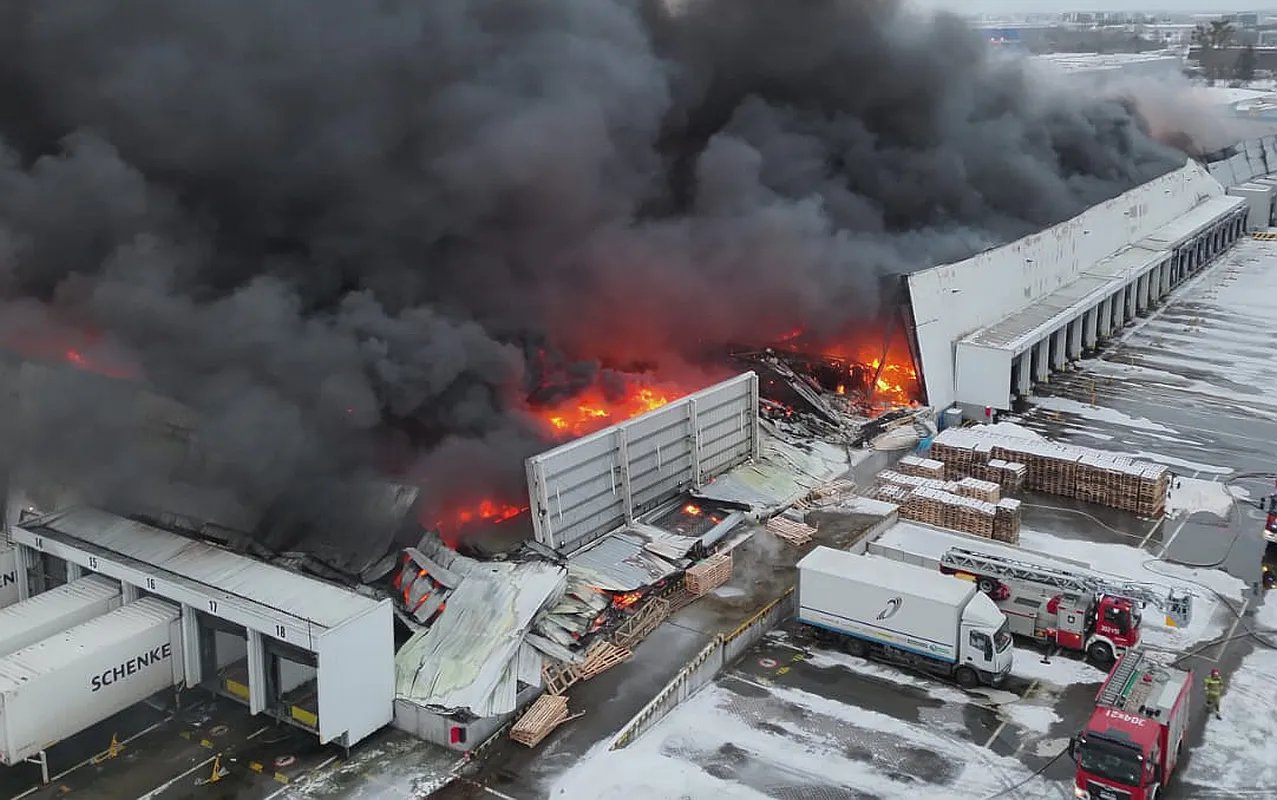
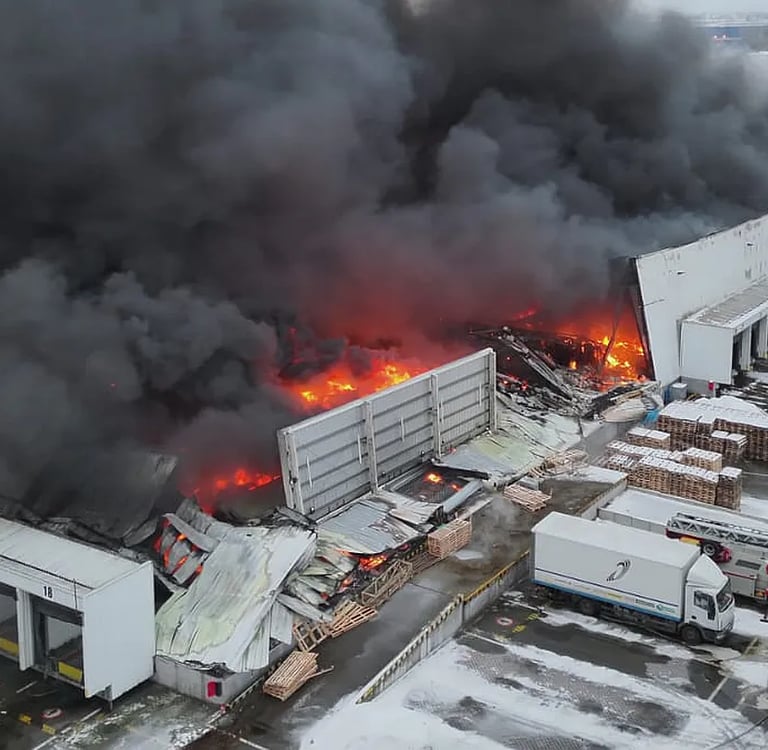
Just last Friday, we warned about "ticking time bombs" in the supply chain. Unfortunately, reality penned a brutal scenario sooner than anyone anticipated. The fire at the DB Schenker logistics center in Tarnowo Podgórne (January 11, 2026) is the moment the industry must stop pretending that the problem doesn’t exist.
This isn’t just another "ordinary fire." It is a systemic warning for every importer and manufacturer. If you ignore battery procedures, you are sitting on a powder keg!
It Wasn't a Workplace Accident, It’s a Trend
The year 2025 went down in logistics history as the "Year of Fire." If you think Tarnowo Podgórne is an isolated incident, look at the data. The scale is global, and losses are counted in the billions.
Ignition Map (2024–2026):
January 2026 (Poland): A fire covering 11,000 m2 of a warehouse near Poznań. A toxic cloud triggered government emergency alerts, and operational losses blocked deliveries for hundreds of companies in the region.
January 2025 (USA, California): A fire at the Moss Landing energy storage facility. Even dedicated facilities struggle with thermal runaway.
Mid-2025 (UK): Insurance reports showed a staggering 93% increase in battery fires compared to previous years.
June 2024 (South Korea, Aricell): The tragic death of 23 people demonstrated that only 15 seconds pass from the first sign of smoke to a full-scale explosion.
The Giant Burned, Too: A $500 Million Lesson
Many importers ask us: "Why does Amazon demand a mountain of paperwork and tests from an independent, specialized lab? It’s just a small battery!"
The answer, though brutal, is simple: Amazon learned the hard way from its own ruins.
Before the e-commerce giant became a "safety policeman," it went through hell. The restrictions blocking your sales today are the result of specific catastrophes:
Redlands, California (2020): A warehouse operated for Amazon by Kuehne+Nagel burned to the ground. The losses were so massive they fundamentally changed how insurers approach the entire e-commerce industry.
Perryville, Maryland (2021) – "The Solar Crisis": A fire on the roof of a distribution center, along with a series of similar incidents in Fresno, forced Amazon to shut down solar installations across the entire USA. It proved that electrical threats, including batteries, are real and unpredictable.
Plainfield, Indiana (2022 / 2025 Report): A fire in a 1.2 million sq. ft. mega-warehouse. Despite modern systems, the fire consumed the building, generating $500 million in losses.
Fall River, Massachusetts (October 2024): Another distribution center evacuation caused by an overheating lithium-ion battery.
Amazon realized that in the fight against lithium, conventional fire protection is ineffective. The only method is to prevent defective goods from entering the warehouse in the first place.
The "Amazon Effect". A Filter That Kills Sales
This is why Amazon and other major players like Maersk and DHL now apply a "Zero Tolerance" policy. Without two key documents, your goods will not enter the warehouse (FBA):
UN 38.3 Test Summary: Proof that the battery survived 8 grueling tests: altitude simulation, thermal, vibration, shock, external short circuit, etc.
Independent Verification: A "Chinese declaration" is no longer enough. The report must come from an external engineering laboratory (like ours) operating under ISO 17025 standards.
If the system detects missing data, the product is flagged as Hazmat (Hazardous Materials) and disposed of at the seller's expense.
Packaging. Your First and Last Line of Defense
Here we reach the heart of the matter. Most fires during transport (cross-docking) result from mechanical damage to poorly packed goods.
A battery is Dangerous Goods (DG). You cannot ship it in a shoebox.
UN-certified packaging is an engineered structure designed to protect us all. In our lab, we see many "certified" boxes fail during the very first attempt.
What do we check?
Drop Test: A package dropped from 1.2 m must survive the fall on its weakest corner. If the cell inside shifts or shorts, it’s a fail.
Stacking Test: We simulate the pressure of other pallets in a warehouse for 24 hours. The bottom package must not collapse.
Void Fillers: Did you use vermiculite or foam glass? These materials isolate the fire if the battery inside ignites.
Saving 2 PLN on a certified box could cost you 50 million PLN in damages.
Who Pays When the Warehouse Burns?
This is the hardest part. During an investigation following a fire like the one in Tarnowo Podgórne, the prosecutor and insurer ask one question: "Was the cargo declared and packed according to ADR?"
If the importer:
Did not possess a valid UN 38.3 report,
Used non-UN certified packaging,
Failed to mark the shipment with a Class 9 sticker,
...they are liable with their personal assets. Carrier insurance (OCP) often excludes "Gross Negligence" claims, and shipping untested batteries is legally considered exactly that.
For us, as a testing laboratory, the DB Schenker fire is further proof that our work: vibration, shock, and thermal testing, is not bureaucracy. It is a matter of public safety.
The era of "it’ll be fine" is over. Global markets are calling your bluff. Secure your legal safety. Verify your reports. Test your packaging. Because when smoke starts rising over the warehouse, it’s too late for an audit.
Contact
+48 32 49 44 305
© 2025 DLP SP. Z O.O.


office@dlp-poland.com

ul. G. Morcinka 7D, 43-417 Kaczyce